
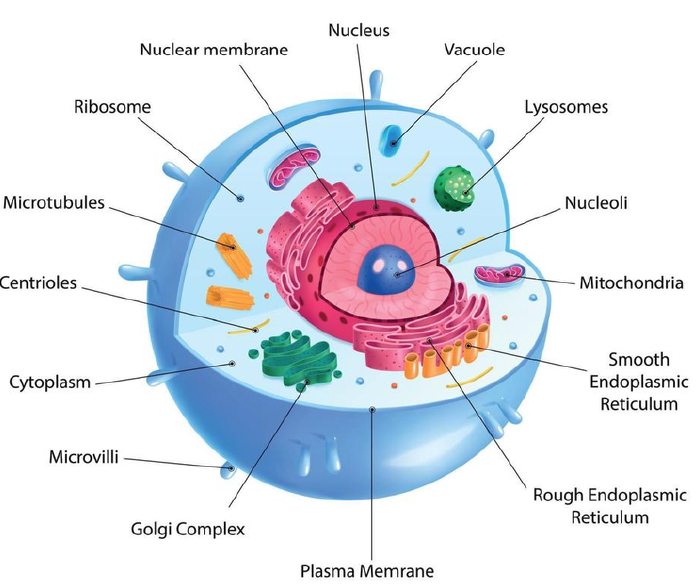
Cells are the basic structural building blocks of the human body. There
are many different types of cells; for example, muscle, nerve, and blood.
These minute cells can only be viewed using a microscope and contain
three main structures – cell membrane, cytoplasm and nucleus. Within
the cytoplasm are different structures that are referred to as organelles.
Cell Structure
Cell Membrane
Cytoplasm – contains organelles
Nucleus
The Cell Membrane
The outer surrounding membrane which forms a barrier between the cell contents and the external environment. This membrane is semi permeable, which means that it allows certain nutrients to pass into the cell and waste products to pass out.
The Nucleus
This is the largest cell structure and is responsible for controlling all cellular activities. DNA is contained within the nucleus of the cell.
Cytoplasm
The liquid within the cell.
Mitochondria
Rod shaped structures which contain enzymes that break down glucose to form energy. Often referred to as the power house of the cell.
Ribosomes
Contain ribonucleic acid. Manufacture enzymes and proteins for the cell to use and also to export to other parts of the body.
Endoplasmic Reticulum
A network within the cell that provides support and also channels the transportation of substances within the cell. Rough endoplasmic reticulum is studded with ribosomes and produces proteins and enzymes. Smooth endoplasmic reticulum produces steroids and phospholipids.
Golgi Apparatus
Similar to smooth endoplasmic reticulum in structure, however have vesicles that contain collagen, protein, enzymes, lipids and mucus. Produces collagen and mucus.
Lysosomes
Powerful enzymes that break down bacteria and destroy damaged cell tissue.
