
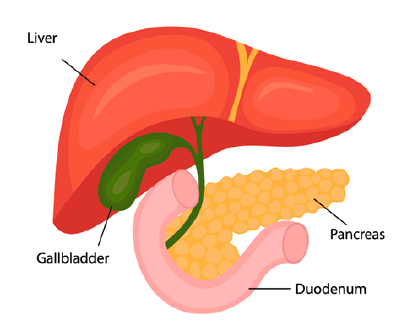
This organ is situated in the abdominal cavity behind the stomach, with
the right side being the widest part and being attached to the
duodenum. This organ is classed as a compound gland as it works as
both an exocrine and endocrine gland, with the exocrine part secreting
digestive hormones and the endocrine part producing two important
hormones; insulin and glucagon.
A part of the pancreas, called the Islets of Langerhans secretes
glucagon which tells the liver to take carbohydrate out of storage to
raise a low blood sugar level if there is one. If the blood sugar level is too
highthe islet cells secrete insulin to tell the liver to take excess glucose
out of circulation to lower it. Both hormones insulin and glucagon
therefore work together to maintain a steady level of glucose, or sugar,
in the blood and to keep the body supplied with fuel to produce and
maintain stores of energy. If there is not enough insulin made by the
body, the blood sugar will rise and become diabetes mellitus. The
exocrine part makes pancreatic juices, and as they are made they flow
into the main pancreatic duct which joins the common bile duct. This
connects the pancreas to the liver and also the gallbladder.
