
Sometimes called the small bowel, the small intestine is the longest
portion of the digestive tract and is approximately 20 feet long is made
up of the duodenum, the jejunum and the ileum and is a narrow tubed
structure that fills most of the lower abdomen. Once the chyme is in the
duodenum, bile from the gallbladder and enzymes from the pancreas
all combine to complete the final stages of digestion. The acid from the
stomach is neutralised in the duodenums alkaline environment.
Gland cells in the small intestine secrete digestive enzymes that chemically break down complex food molecules into simpler ones.
The chyme leaves the duodenum and it enters the jejunum and ileum.
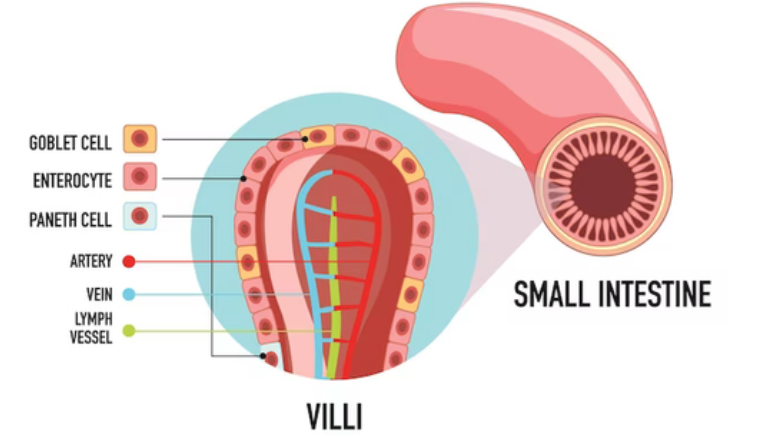
Here the nutrients are absorbed through the lining of the small intestine
and transferred to the bloodstream and liver by tiny villi which cover the
walls of the small intestine.
These finger like projections allow for a greater surface area, allowing
the chyme to be absorbed. Such products as fibre and water, that have
not been digested in the small intestine travel to the large intestine. The
ileum is the final portion of the small intestine, which leads into the
large intestine.
