
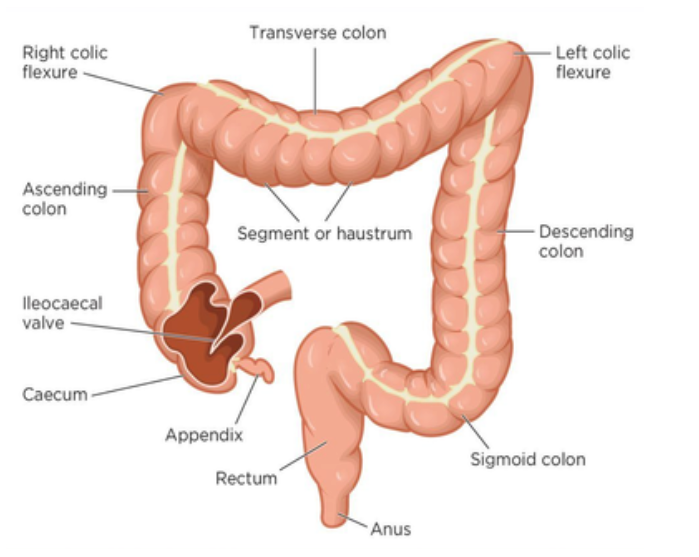
Sometimes called the large bowel, the large intestine collects and stores
all waste products before processing them into faeces to be removed
from the body. This part of the intestines is around 5 feet long and is
made up of the caecum, appendix, colon and rectum.
The caecum is shaped like a pouch and is found in the right lower
abdomen and stores all the material; fibre, water salts and some
vitamins from the small intestines before moving it along to the colon.
The material enters the expanded caecum through a valve that
separates the small intestines from the large intestine. A small
projection, the appendix, emerges from the caecum, and although it has
no known function it can become troublesome if it becomes infected
Starting at the caecum, the ascending colon travels up the abdomen
towards the liver. The colon then becomes transverse as it travels across
the abdomen, and then descends down the left side of the abdomen to
the sigmoid colon. This S shaped organ is the largest part of the
intestine and joins onto the rectum. All the time that the processed
mixture is in the colon, mucus and bacteria from within the large
intestine mix and starts to form faeces. This water and some vitamins
and minerals from the faeces are then absorbed into the colon.
The faeces are pushed along to the sigmoid colon and finally the rectum
by muscular action, where they are stored until being passed as a bowel
motion.
