
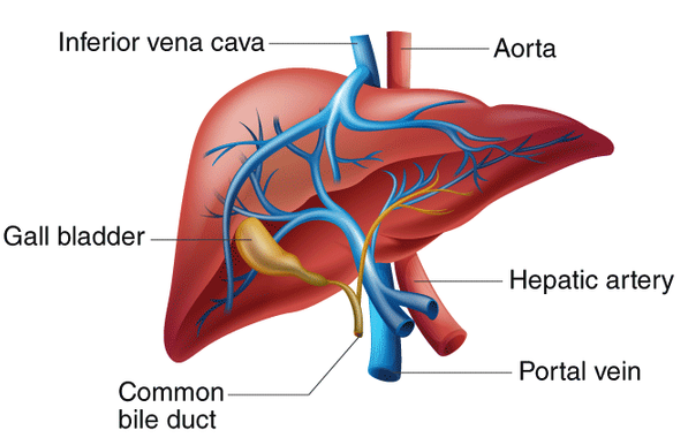
Found in the upper abdominal cavity towards the right and above the
diaphragm, the liver is the heaviest gland in the body. The livers cells or
hepatocytes process chemical changes and its main function is to
regulate the composition of blood, so is therefore highly vascular,
receiving oxygenated blood via the hepatic artery and deoxygenated
blood from the stomach and intestines via the hepatic portal vein. Here,
excess glucose from the blood is removed and stored in the form of
glycogen, until all the glucose in the body has been used up and blood
sugar levels fall. The liver then re-converts the glycogen back into
glucose. Filtering the blood of any harmful substances is crucial and this
is done by the liver extracting it from the blood. Blood is transported
back to the heart via the inferior vena cava.
As well as the mentioned functions, the liver also secretes bile, which
consists of cholesterol, pigments, salts and traces of other substances.
Bile is removed from the liver to the gall bladder for storage via the
canaliculi.
