
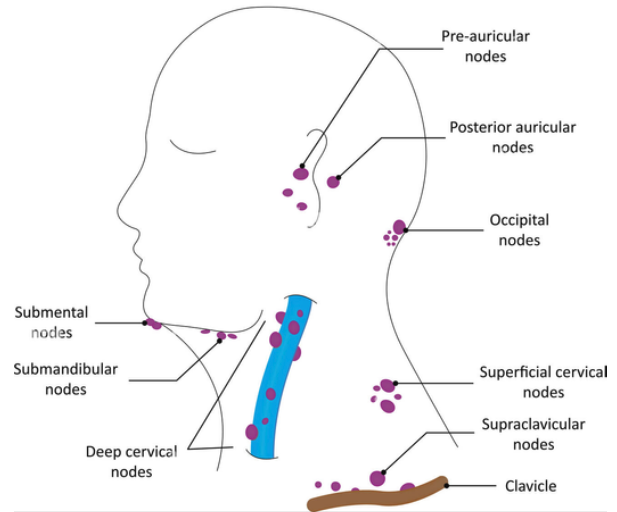
The lymph system is a collection of thin tubes that carries colourless
liquid called lymph. As discovered in the circulatory system, blood
travels around the body and delivers oxygen and other nutrients. On its
journey, fluid leaks into the bodies tissues and it is this fluid which
makes the lymph, along with substances such as fibrinogen, water and
lymphocytes. It travels around the tissues of the body and carries white
blood cells. After travelling around the body, lymph enters one of the
major lymphatic vessels, the thoracic duct, which begins near the lower
part of the spine and collects lymph from the pelvis, abdomen, and
lower chest. This duct runs up through the chest and empties into the
blood through a large vein near the left side of the neck. The right
lymphatic duct is the other major lymphatic vessel and collects lymph
from the right side of the neck, chest, and arm, and empties into a large
vein near the right side of the neck. This means that lymph is
continuously emptied into the blood where it mixes with the plasma.
The system has no heart or arteries, but capillaries that extend into
most tissues, which run parallel to the blood capillaries. In conclusion,
the main function of the lymphatic system is to fight infection, distribute
fluid and transport fats around the body.
The main functions are:
- to collect and return interstitial fluid, including plasma protein to the blood, and thus help maintain fluid balance
- to defend the body against disease by producing lymphocytes
- to absorb lipids from the intestine and transport them to the blood.
